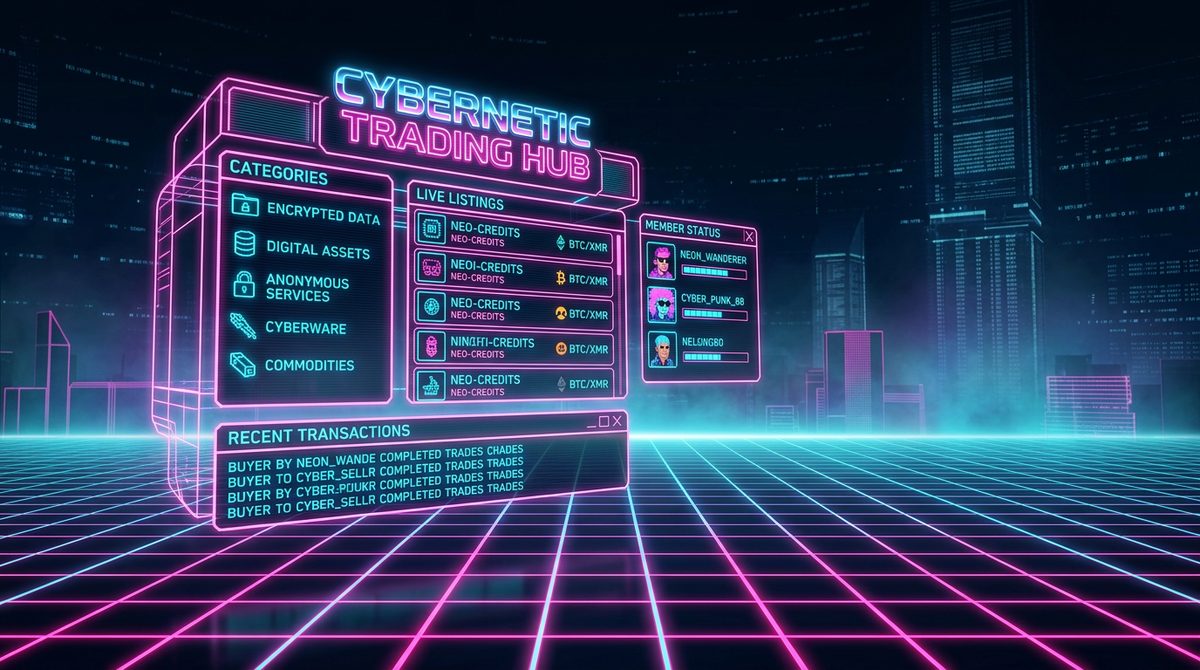
Nexus Onion darknet marketplace cybernetic trading hub interface visualization

What is Nexus Market?

Nexus Onion is a privacy-focused darknet marketplace accessible exclusively through the Tor network. Unlike many platforms that have come and gone in the decentralised marketplace ecosystem, this platform was engineered with a security-first philosophy — meaning that buyer and vendor protections were baked into the architecture from day one, rather than bolted on as afterthoughts.

The marketplace operates entirely on .onion v3 addresses, the modern Tor hidden service standard that offers stronger cryptography and better resistance to enumeration attacks than the older v2 format. Every connection to the platform travels through multiple Tor relays, making traffic analysis extraordinarily difficult.

Nexus Darknet supports three cryptocurrencies — Monero (XMR), Bitcoin (BTC), and Litecoin (LTC) — with Monero strongly recommended for maximum financial privacy. The platform's escrow system operates on a multi-signature model, ensuring that funds can never be unilaterally controlled by any single party. This is the cornerstone of buyer and vendor trust on the Nexus Url.

From a research and informational perspective, Nexus Market represents an important case study in how decentralised, privacy-preserving technologies are implemented in live marketplace environments. The design choices made here — from cryptographic key management to dispute resolution workflows — offer valuable insights into operational security at scale.
Platform at a Glance

8,400+
Active Listings
1,200+
Verified Vendors
95%
Escrow Success Rate
3
Active Mirrors

12 Core Features Explained

A detailed breakdown of each security and usability feature that defines the Nexus platform.

Multi-signature blockchain escrow system

Multi-Signature Escrow

Funds are held in a 2-of-3 multi-sig wallet controlled by buyer, vendor, and admin. No single party can release funds alone — a cryptographic guarantee against exit scams and premature fund release. Smart contract logic governs every transaction lifecycle.

PGP encryption authentication and key verification

Mandatory PGP Authentication

All accounts enforce PGP 2FA. Login sessions are verified by signing a challenge with your private key. Shipping addresses must be PGP-encrypted before submission. This ensures that even in the event of a server compromise, user data remains ciphertext.

Two-factor authentication security verification

Two-Factor Authentication (2FA)

Beyond PGP login verification, the platform offers TOTP-based 2FA as an additional layer. Users can pair an authenticator application to their account, requiring a time-sensitive one-time password on each session — significantly reducing account takeover risk.

Monero XMR privacy cryptocurrency support

Monero (XMR) Support

Monero is the native preferred currency. Its ring signature technology, stealth addresses, and RingCT confidential transactions make on-chain analysis practically impossible — unlike transparent blockchains. Deposits and withdrawals are processed with no KYC or transaction linkability.

Escrow financial protection system

Finalize Early (FE) Controls

Finalise Early is disabled by default for all vendors below a certain transaction threshold. This protects buyers from being pressured to release escrow before delivery. Only Level 3+ trusted vendors may enable FE, and only for categories that traditionally require it.

Vendor security bond deposit guarantee

Vendor Bond System

All vendors must post a non-refundable bond before listing products. This financial commitment filters out casual scammers and ensures vendors have skin in the game. Bond amounts are tiered based on product category risk, with higher-stakes categories requiring greater commitments.

Admin dispute resolution mediation system

Admin Dispute Resolution

When buyer and vendor reach an impasse, trained admin mediators review evidence submitted by both parties. The admin team operates with strict neutrality protocols, documented resolution timelines, and escalation procedures for complex cases — providing true third-party arbitration.

Encrypted communications end-to-end messaging

Encrypted Messaging

All on-platform messages are encrypted at rest using the recipient's stored PGP public key. No plaintext messages ever touch the server. The messaging architecture supports key-pinning to prevent man-in-the-middle interception during key exchanges between users.

Verified vendor trust system

Vendor Verification Tiers

New vendors start at Trust Level 1. As transaction volume, positive feedback, and tenure grow, vendors progress through five levels — each unlocking additional privileges like higher withdrawal limits, FE eligibility, and featured placement in search results.

Vendor reputation rating review system

Reputation & Review System

Buyers can leave detailed reviews including product quality, stealth rating, communication speed, and an overall score. Reviews are cryptographically tied to completed transactions — preventing fake reviews from unverified purchases. Vendors cannot delete negative feedback.

No-JavaScript mode anonymous privacy protection

No-JavaScript Mode

The entire platform functions with JavaScript fully disabled — the recommended configuration when using Tor Browser at "Safest" security level. This eliminates entire classes of browser-based deanonymisation attacks including WebRTC leaks, canvas fingerprinting, and JS-based exploits.

Tor onion mirror network redundancy

Multi-Mirror Architecture

Three independent .onion v3 mirrors run simultaneously on separate infrastructure. If one mirror experiences downtime, the others remain fully operational. All mirrors serve identical content and share the same authentication backend, ensuring zero service disruption for users.

How Trust is Built and Maintained

Trust in a pseudonymous marketplace is not given — it is earned and enforced through layered technical and social mechanisms. The Nexus darknet platform uses a combination of cryptographic proofs, economic incentives, and community moderation to maintain a functioning trust ecosystem.

Economic Incentives

Vendor bonds create a financial stake. Multi-sig escrow prevents premature fund release. These economic tools align the interests of vendors with honest dealing — scamming becomes economically irrational when the cost of a bond loss outweighs the gain from a single fraudulent transaction.

Cryptographic Proofs

PGP-signed communications provide non-repudiation. Vendors can prove they wrote a message; buyers can verify they're communicating with the correct party. This eliminates impersonation — a common attack vector on less sophisticated platforms.

Community Transparency

The public review system creates accountability. Every completed transaction can generate a verifiable review, building a reputation record that accurately reflects a vendor's historical performance. This is far more reliable than subjective trust scores assigned by administrators.

Product Categories

Important: This information is provided for educational and research purposes only. This site does not facilitate, encourage, or endorse any illegal activity. All content describes publicly documented marketplace structures.

Darknet marketplaces typically organise listings into taxonomic categories. Based on open-source research and academic documentation, the Nexus market structure includes these major verticals: digital goods (software, credentials, data), counterfeit documents, pharmaceuticals, substances, financial instruments, and cybersecurity-related listings. Each category has its own vendor verification requirements and bond tiers.

Academic researchers studying underground market economies have documented that the shift toward privacy-coin-first payment systems, combined with multi-sig escrow and mandatory PGP, represents a significant maturation in operational security compared to early-generation darknet markets.

Ready to Verify Access?

Get the verified .onion links, check the PGP key, and follow the step-by-step entry guide on the access page.

View Verified Links → OPSEC Guide